

Export Data to VRML - Design Data
Select the Design Data option to export the desired design data to a .wrz (comclicked) or.wrl (uncomclicked) file.
Instructions
On the File menu, click Export to display the Export panel.
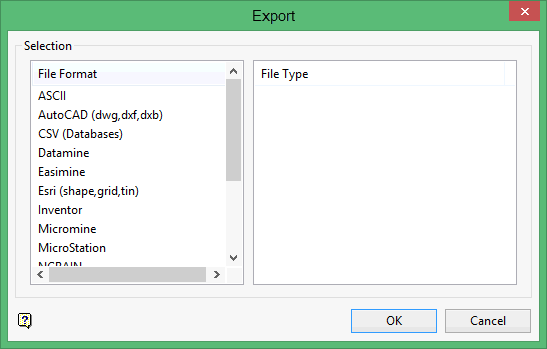
Click VRML in the File Format column on the left.
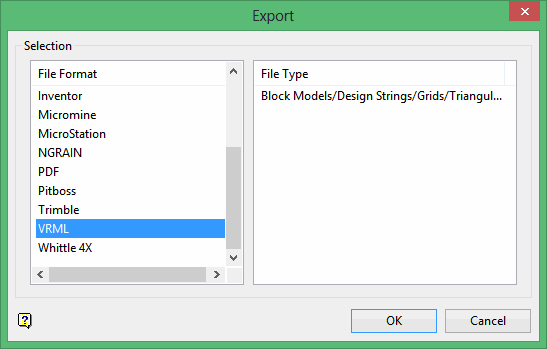
Select Block Models (Model) from the File Type field on the right side of the panel.
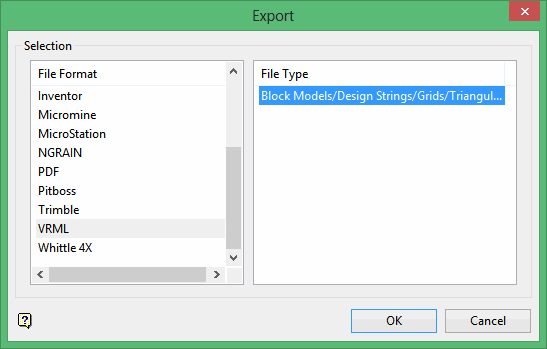
Click OK to display the Export to VRML panel.
Click Design Data.
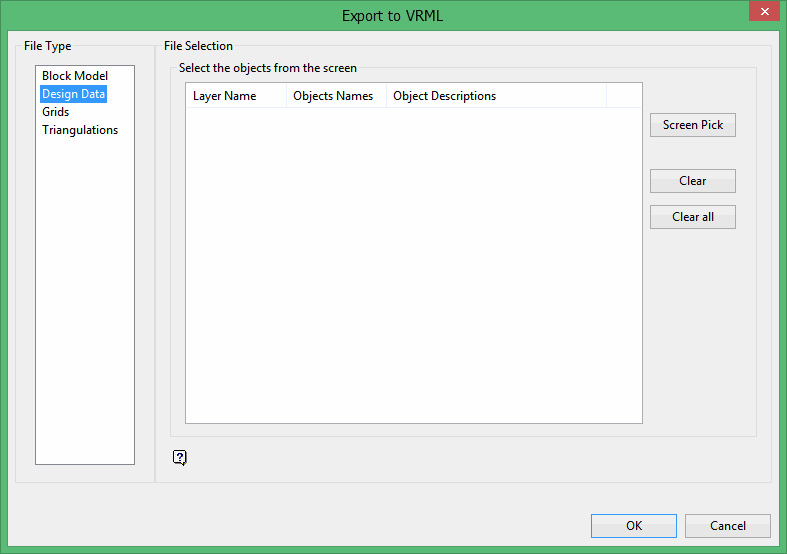
Click the Screen Pick button to select the design data, 2D text, or 3D text to export. The Select by Multiple Selection box displays. From the dialog box, nominate a selection method, (for example by layer, object name, etc.). and then select the desired data to export. Right click to complete the selection.
If you are exporting text:
-
2D and 3D text is supported.
-
Hardware text is not supported.
-
True Type fonts will replicate exactly as they were in Vulcan.
An entry, which consists of the object name and description for each of the selected design objects, displays in the File Selection window. Use the Clear and Clear all buttons to remove selected objects from the displayed list. When all desired objects have been selected, click OK to begin the export.
The Convert to VRML panel displays.
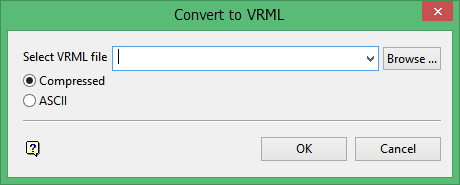
Select VRML file
Enter or select the file name to be used to store the exported data. The drop-down list contains all VRML (.wrz or .wr;) files found within your current working directory. Click Browse to select a file from another location. To create a new file, enter the file name and file extension.
Compressed
Select this option to export the VRML file in a compressed format. The resulting file will have a .wrz extension.
ASCII
Select this option to export the VRML file in an ASCII format. The resulting file will have a .wrl extension. This format is only recommended for users that want to work directly with the exported VRML file.
Click OK.
The export will continue and the resulting file will be stored in the current working directory.
Once the selected grid(s) have been successfully exported, the resulting file can then be viewed with any VRML viewer, for example the Cortona3D Viewer. Additionally, using a VRML plug-in you can insert the file into a variety of applications such as Microsoft Word or PowerPoint.
For design data exports that fall outside of the VRML viewing range (coordinates above/below +/- 32 million) the data will be shifted and/or shrunk as necessary to fit within the available space.
